
In the long and wandering arc of Tomáš Svoboda’s life, from Prague to Amsterdam, from Paris to Africa, from presidential aircraft to forgotten streets of Chernobyl, one evening in 1194 remains fixed in memory with unusual clarity.
It was the night a Czech photographer, travelling with the state delegation of President Václav Havel, attended an official banquet in Thailand. Beneath chandeliers, surrounded by uniforms, diplomats and royal protocol, an elderly Thai general suddenly needed assistance.
Many noticed. None moved.
Svoboda did.
“I was fast, you know, I am sort of impulsive, and I helped him,” he recalls simply.
What followed belongs to the kind of diplomacy that never appears in communiqués.
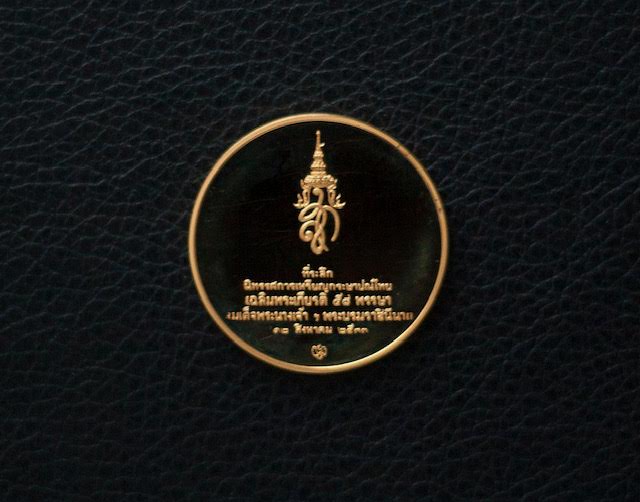
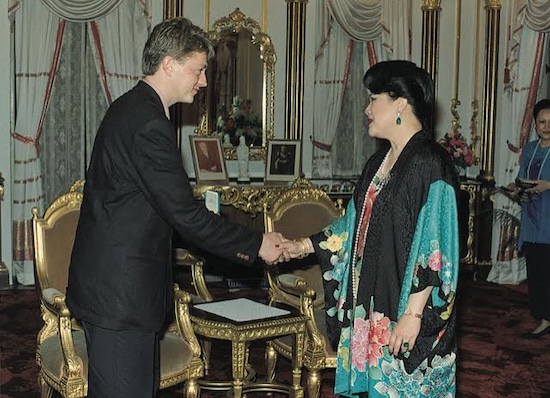
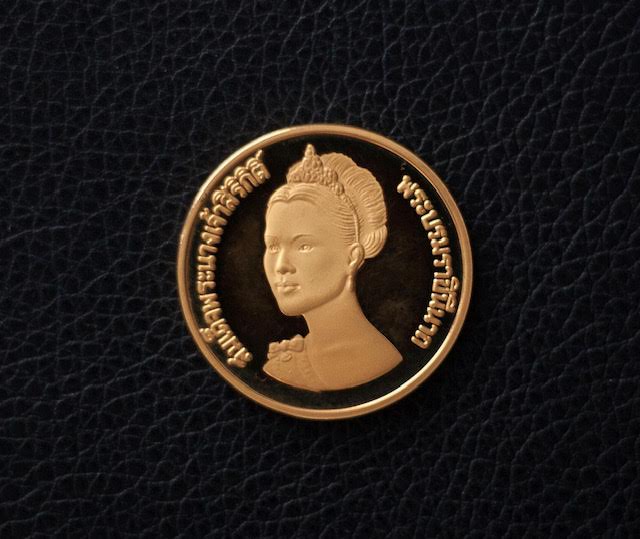
The next morning, Tomáš Svoboda was summoned for a private audience, where Queen Sirikit of Thailand presented him with a gold medal bearing her royal insignia, placed in an elegant signed box, a gesture of gratitude from Her Majesty. It is, Svoboda notes, an honour few across the world possess at all.
For a man whose life has been spent behind the lens, it became one of the most memorable images he never photographed.
A Gesture Beyond Protocol
State visits are choreographed to the minute. Every seat, every entrance, every toast has meaning. Yet diplomacy is not sustained by ceremony alone. Sometimes it reveals itself in instinctive gestures of humanity.
Back home, reactions were mixed. Some were warm, others less so. Success, especially unusual success, can invite envy anywhere in the world. Yet the honour itself required no explanation. It had been given freely, from one court to one guest, without negotiation or expectation.
Years later, when Svoboda married in Prague, he and his wife were invited to the Thai Embassy, where further gifts connected to the royal household awaited them, a quiet continuation of a bond first formed at that dinner table in Bangkok.
The medal remains with him today.
A Life Between Countries
Though he is a “Prague person” at heart, Svoboda’s journey began in a “charming town, Karlovy Vary,” before being raised in Prague and Eastern Bohemia and later moving with his family to the Netherlands when he was thirteen.
Amsterdam would shape the next seventeen years of his life.
There, at seventeen, he first picked up a camera.
“It was kind of an escape,” he says. “Out of my life.”
He taught himself the craft, later refining his eye through workshops with celebrated photographers William Klein and Franco Fontana. He also experimented with filmmaking, working with Super 8 and 16 millimeter film, while studying in The Hague and briefly contributing to regional television.
Art, it seems, ran in the family. His mother was a professor of Czech literature. His father taught Russian literature and film. His grandfather had worked as an artist and actor.
“I have it in my genetics, I guess, a little bit,” he says.
Behind the Presidential Curtain
In 1990, as the Iron Curtain lifted and Central Europe reintroduced itself to the world, Svoboda returned to Czechoslovakia.
The timing was historic.
Through contacts close to President Václav Havel, he gradually found his way into official circles and onto presidential journeys abroad. He would travel on state trips across Asia and the Pacific, including Thailand, India and the Philippines, and Australia, New Zealand and Singapore.
Later, he also served as official photographer during the state visits of Havel’s successor, Václav Klaus.
But while others focused on podiums and handshakes, Svoboda looked elsewhere.
“You can be creative with that,” he says. “Try to take the photos differently.”
What interested him most were the unscripted moments.
He remembers Havel, playwright turned president, slipping away from security to share a beer with ordinary people in a pub. He recalls Klaus, the economist, in mountain settings, Kyrgyzstan once, the delegation wandering like alpine tourists in trekking shoes.
“I enjoyed the idea of taking a more humanist kind of view of these people,” Svoboda says.
Leaders were revealed not only as officeholders, but as people.
The Professional Daydreamer
Asked how he would describe himself after decades of work across genres, countries and styles, Svoboda does not hesitate.
“I am a professional daydreamer.”
The phrase fits.
His career has resisted easy classification. He spent four years in Paris working for the renowned Gamma picture agency. Later came years in Sweden. He edited magazines, wrote illustrated weekend features for newspapers, and built a body of work that moved effortlessly between reportage and art.
His photography has travelled almost as widely as he has. Exhibitions of his work have been staged across Europe, including the Czech Republic, Sweden, Russia, Paris, Ukraine and the Netherlands, a testament to the international reach of an eye shaped by movement, curiosity, and place.
His photographic subject fell into several long-running series: celebrations around the world; the texture of everyday life, how people eat, sleep, parade, and meet one another; abandoned places, with four visits to Chernobyl alone; animals and wildlife, from Botswana’s one vast plains to the Himba of Namibia; landscapes; and human faces.
He has searched for beauty not only in grandeur, but in ruin, ritual and routine.
Three books have emerged from these decades of observation: one dedicated to black-and-white artistic photography, one to celebrations around the world, and another to abandoned places.
Cities with Soul
Some photographers speak in lenses. Others in light. Svoboda speaks in cities.
Asked which city possesses the most photogenic soul, he answers immediately.
Sana’a, Yemen.
To him, the old Yemeni capital felt like stepping into another century.
“The Arabic world three hundred years ago,” he says, “like One Thousand and One Nights”
Another favorite is Harar in eastern Ethiopia, where hyenas move through the streets at night and moonlight transforms old stone walls into theatre.
Closer to home, he names Prague and Venice.
New Tools, Same Curiosity
Now in his sixties, Svoboda lives once again in Prague. He works part-time at the Jewish Museum, where his five languages and ease with people remain useful.
Yet retirement of curiosity does not interest him.
His artistic life has not slowed, it has only shifted shape. He has taken up a small role as an SS officer in a Czech feature film set during the Second World War, an unfamiliar register for him, but one he finds creatively inviting.
“It’s more creative to play an evil character,” he says.
He has also begun an unlikely collaboration with artificial intelligence. For years he made paper collages, cutting from books and magazines, gluing and tearing and assembling again,inspired by a Paris-based artist he used to visit from Amsterdam.
A few months ago he began experimenting with AI tools, producing short experimental animation films from his collages and from photographs of the small skeleton models he once built from animal skulls.
Images from Chernobyl drift back to life. African elephants cross sunsets he once captured himself.
Technology changes, instinct does not.
The same man who once learned photography in Amsterdam still wakes eager to experiment.
What Remains
Tomáš Svoboda has spent decades photographing ceremonies, presidents, distant landscapes and fleeting expressions.
Yet perhaps the story that defines him best contains no camera at all.
A banquet hall in Bangkok.
An elderly man needing help.
A room that hesitated.
One guest who did not.
Svoboda still keeps the medal, pure gold, the royal insignia, signed box and all.
But perhaps the true honour was something less tangible: the confirmation that in a world of titles, uniforms and protocol, simple human instinct still matters.